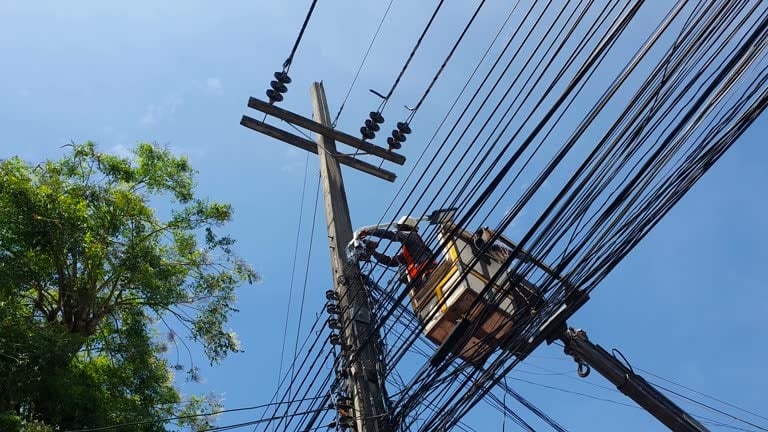
For power linemen, tools are extensions of their hands, enabling them to perform tasks safely and efficiently. However, even the most robust tools can encounter issues, especially under the rigorous conditions of fieldwork. Understanding how to troubleshoot common tool problems is essential for maintaining productivity and ensuring safety.
1. Stringing Blocks: Ensuring Smooth Cable Deployment
DDIN’s range of stringing blocks, including the DNCB-1 Universal Stringing Block, are engineered for efficient conductor installation. However, exposure to harsh environmental conditions can lead to wear and tear.
Troubleshooting Tips:
- Visual Inspection: Regularly check for cracks, deformation, or wear on the sheaves and frames.
- Rotation Check: Ensure the sheaves rotate freely without resistance. Stiffness may indicate bearing issues.
- Cleaning: Remove debris and contaminants that can impede movement or cause damage.
2. Clipping Hooks: Maintaining Secure Connections
Tools like the DDIN Mid-Size Clipping Hook are vital for securing conductors. Over time, components can loosen or degrade.
Troubleshooting Tips:
- Component Check: Inspect the shackle and urethane lining for signs of wear or damage.
- Load Testing: Verify the hook’s load-bearing capacity hasn’t been compromised.
- Label Inspection: Ensure the identification tags are legible for tracking and maintenance records.
3. Tri-Clamp System: Streamlining Bolt Connections
The DDIN Tri-Clamp is designed to hold bolts securely, facilitating faster and safer connections. Improper use or wear can lead to inefficiencies.
Troubleshooting Tips:
- Alignment Verification: Ensure the clamp aligns correctly with NEMA spacing standards.
- Component Integrity: Check the starter socket and clamps for signs of wear or damage.
- Cleaning: Keep the components free from debris to maintain optimal performance.
4. Transformer Slings: Ensuring Safe Lifting
DDIN’s transformer slings are essential for lifting heavy equipment safely. Over time, slings can suffer from fraying or weakening.
Troubleshooting Tips:
- Visual Inspection: Look for signs of fraying, cuts, or abrasions on the sling material.
- Load Testing: Periodically test the sling’s load capacity to ensure it meets safety standards.
- Storage: Store slings in a dry, cool place to prevent material degradation.
5. Traveling Grounds: Maintaining Electrical Continuity
Traveling grounds are crucial for maintaining electrical continuity during line work. Corrosion or mechanical damage can compromise their effectiveness.
Troubleshooting Tips:
- Connection Check: Ensure all connections are tight and free from corrosion.
- Cable Inspection: Look for cuts, abrasions, or signs of wear on the grounding cables.
- Cleaning: Clean contact surfaces to ensure optimal electrical conductivity.
Preventive Measures and Best Practices
- Regular Maintenance: Implement a routine maintenance schedule for all tools.
- Proper Storage: Store tools in protective cases or designated areas to prevent damage.
- Training: Ensure all personnel are trained in proper tool use and maintenance procedures.
By understanding how to troubleshoot common tool issues and implementing preventive maintenance practices, linemen can ensure their tools remain reliable allies in the field. Investing time in tool care not only extends the life of the equipment but also upholds the safety standards essential in the power industry.
Note: For specific tools and maintenance procedures, always refer to the manufacturer’s guidelines and recommendations.