The Ultimate Checklist for Tool Inspections Before Every Shift
A Practical Safety Routine for Linemen
For linemen, tools aren’t just equipment; they’re lifelines. Every job depends on gear that performs exactly as expected under every imaginable condition. Storm response, long shifts, extreme weather, and heavy workloads all place significant stress on tools and equipment.
A quick but thorough inspection before every shift will prevent accidents, extend tool life, and ensure compliance with safety standards. Even small issues, like a worn strap or a hairline crack, can lead to dangerous failures if left unchecked.
This ultimate pre-shift checklist helps linemen confirm that their gear is safe, reliable, and ready for the job.
Why Pre-Shift Tool Inspections Matter
Utility work consistently ranks among the most hazardous occupations in the United States due to electrical exposure, heights, and heavy equipment. Because of these risks, organizations like OSHA emphasize the importance of regular equipment inspection and maintenance.
Routine inspections help crews:
- Detect hidden damage before it becomes a failure
- Reduce workplace injuries and near misses
- Maintain OSHA compliance
- Extend the service life of expensive tools
- Prevent downtime in the field
When inspections become part of your daily routine, safety improves, and crews work with greater confidence.
Source: Occupational Safety and Health Administration (OSHA) guidance on tool and equipment safety emphasizes maintaining tools in a safe condition and inspecting them regularly.
The Lineman’s Pre-Shift Tool Inspection Checklist
The goal isn’t to slow down the start of the workday. There is an old adage to keep in mind here: “slow down now to speed up later.” A pre-shift tool inspection can catch potential hiccups and ensure smoother work days.
1. Inspect Hand Tools for Structural Damage
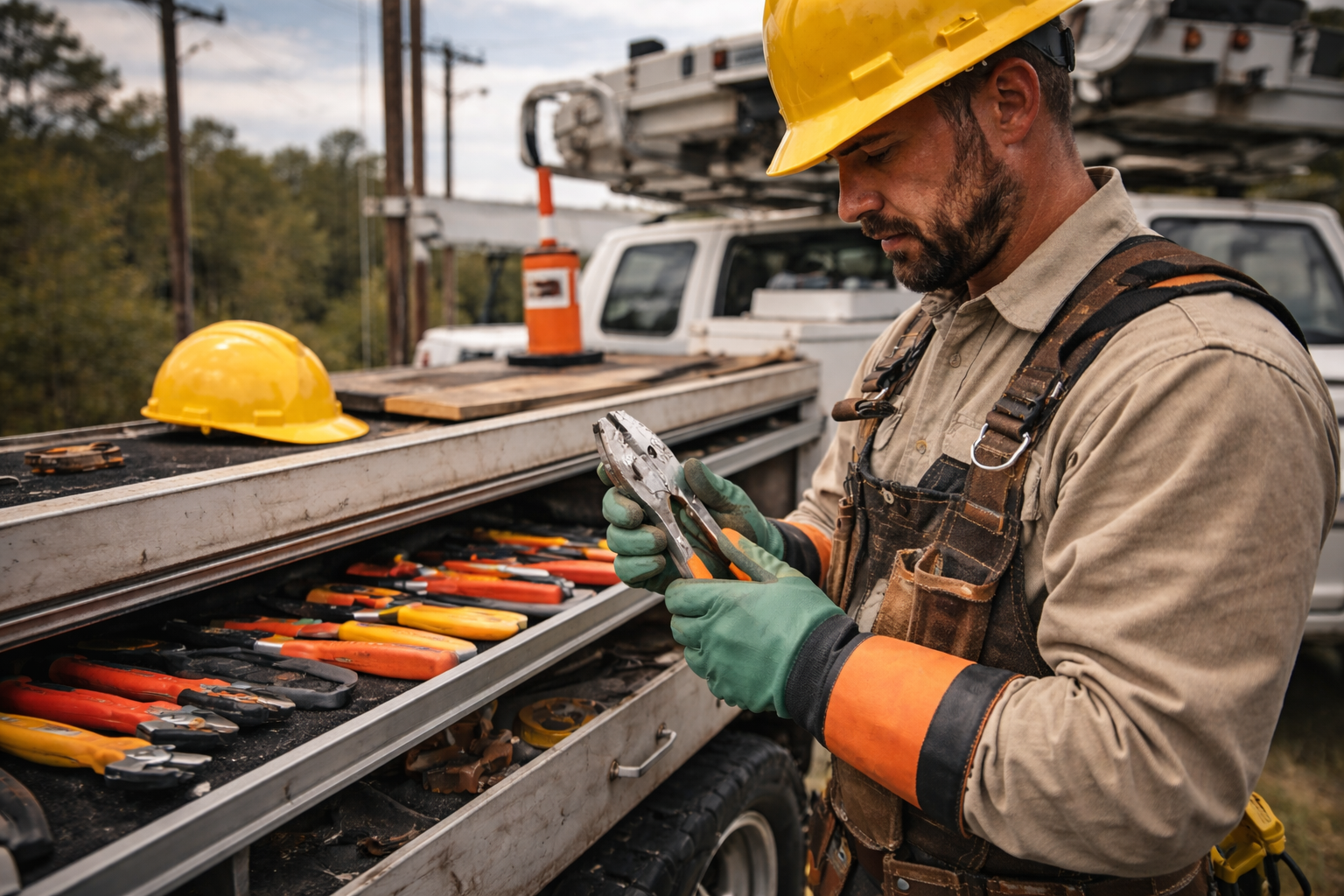
Start with the tools you’ll use most frequently: pliers, cutters, crimpers, wrenches, and screwdrivers.
Look for:
- Cracked or bent tool bodies
- Loose rivets or joints
- Excessive wear on cutting edges
- Corrosion or rust buildup
- Handles that are loose or damaged
A compromised hand tool is potentially dangerous, causing injuries or damaging energized equipment.
If a tool shows visible structural damage, remove it from service immediately.
2. Check Insulated Tools Carefully
Insulated tools are critical for working around energized equipment. Their protective coating must remain intact to maintain electrical safety.
During inspection:
- Look for cuts, gouges, or worn insulation
- Ensure insulation covers the proper area
- Check for discoloration or burn marks
- Confirm insulation rating labels are still visible
Even minor damage to insulation can compromise protection against electrical hazards.
Many industry safety guidelines recommend removing insulated tools from service if insulation becomes damaged or degraded.
Source: National Electrical Safety Code (NESC) and OSHA electrical safety guidance stress the importance of properly maintained insulated tools for energized work environments.
3. Examine Climbing Gear and Fall Protection
For linemen, climbing equipment is among the most critical gear to inspect before every shift.
Check the following:
Climbing belts and harnesses
- Frayed stitching
- Torn webbing
- Deformed D-rings
- Worn padding
Straps and lanyards
- Cuts or abrasions
- Damaged hardware
- Weak or stretched sections
Fall protection equipment should be removed from service if any structural damage is found.
According to OSHA standards, fall protection equipment must be inspected regularly before use to ensure it remains in safe working condition.
4. Check Hydraulic and Mechanical Tools
Hydraulic crimpers, cutters, and presses play a major role in line work. Because these tools operate under high pressure, even small issues can become serious hazards.
During inspection:
- Look for hydraulic fluid leaks
- Inspect hoses for cracks or swelling
- Ensure fittings are secure
- Test moving parts for smooth operation
- Check pressure gauges and controls
Any hydraulic leak should be addressed immediately before the tool is used in the field.
5. Inspect Storage and Transport Equipment
Tool storage is often overlooked during inspections, but damaged containers can contribute to tool damage or loss.
Check:
- Tool bags for tears or broken zippers
- Bucket truck storage compartments
- Steel tool baskets for structural integrity
- Secure mounting points or hooks
Proper storage protects tools from moisture, corrosion, and impact damage during transport.
6. Look for Signs of Corrosion or Moisture Damage
Lineman tools often face harsh environments, rain, snow, humidity, mud, and road salt. These conditions can accelerate corrosion.
Watch for:
- Rust forming on metal surfaces
- Pitting or discoloration
- Stiff joints or seized moving parts
Cleaning and lightly lubricating tools when needed can significantly extend their lifespan and prevent unexpected failures.
Corrosion not only shortens tool life but can weaken structural integrity over time.
7. Confirm Tools Are Properly Rated for the Job
Before heading to the work site, confirm that tools match the requirements of the job.
Check:
- Voltage ratings for insulated tools
- Load ratings for lifting equipment
- Compatibility with connectors or hardware
- Manufacturer specifications
Using tools outside their rated limits increases the risk of failure.
8. Remove and Report Damaged Tools Immediately
If something doesn’t look right, trust your instincts.
The best practice is simple:
- Tag damaged tools
- Remove them from service
- Report the issue to supervisors or equipment managers
Quick reporting prevents defective tools from accidentally returning to circulation.
Many companies implement tool tracking systems or inspection logs to ensure accountability and replacement when necessary.
Building a Culture of Tool Safety
The safest crews are those that treat inspections as routine, not optional. When every lineman checks their equipment before each shift, the entire team benefits.
Pre-shift inspections:
- Prevent avoidable accidents
- Improve operational efficiency
- Protect workers and equipment
- Reinforce professional standards in the field
A five-minute inspection can prevent hours of downtime, or even save a life.
Final Thoughts
By following a consistent pre-shift inspection checklist, linemen ensure that their gear remains safe, reliable, and ready for whatever the day brings.
Because in this trade, preparation isn’t just good practice, it’s your livelihood.