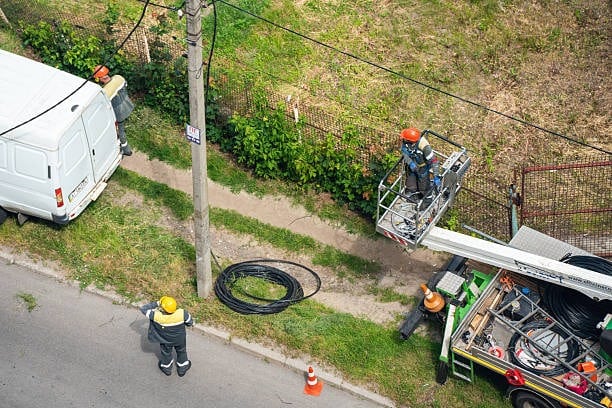
For linemen, a mobile workstation is more than a truck, cart, trailer, or storage compartment. It is the operating center for the day’s work. When a crew is setting poles, stringing conductors, working transformers, handling grounding, or preparing for sagging work, the right tool has to be easy to find, easy to inspect, and ready to use. In utility fieldwork, organization is not just about convenience. It directly affects efficiency, jobsite flow, and crew confidence.
That is where a workstation built around DDIN lineman tools can make a measurable difference. DDIN positions its products as tools “built for linemen,” with product categories that include stringing blocks, traveling grounds, transformer slings, reel lifters, handline and rigging blocks, pole pulling equipment, sagging equipment, grounding accessories, compression dies, storage, and accessories.
A strong mobile workstation starts with one simple principle: every tool should have a job-specific place. Linemen do not have time to dig through loose compartments, guess where a block was stored, or search for grounding accessories while a task is already underway. A well-planned setup groups tools by workflow so that crews can move from preparation to execution with fewer delays.
For example, stringing blocks, uplift or hold-down blocks, handline blocks, and rigging blocks should be organized in a way that supports how crews actually work. Grounding tools should be separated, easy to inspect, and protected from unnecessary wear. Transformer slings, reel lifters, conductor brushes, clipping hooks, sagging tools, and compression dies should each have dedicated storage zones, not just open space in the back of a truck. DDIN’s catalog includes many of these utility-specific tools, which makes it easier to build a workstation around real field tasks rather than generic storage categories.
Durability is another critical factor. Utility work exposes tools to harsh conditions: mud, vibration, weather, heavy loads, rough handling, and repeated daily use. A mobile workstation should protect the tools as much as it organizes them. DDIN tools and equipment are manufactured to high-quality-control standards and built to withstand the abuse linemen place on them. That matters because the best tool system is not only the one that looks organized at the start of the day. It is the one that still works after months of real field conditions.
Safety also improves when tools are stored with intention. A cluttered truck bed or disorganized compartment creates opportunities for damaged equipment, missed inspections, and unnecessary movement around the jobsite. When rigging equipment, grounding accessories, and sagging tools are stored in dedicated, visible locations, crews can more quickly confirm that the right items are present before work begins. This reduces the chance of arriving at a job without a needed tool or using equipment that should have been flagged for service.
A mobile workstation should also account for tool weight and handling. Reel lifters, transformer slings, rigging blocks, and pole-pulling equipment may need reinforced storage areas, tie-down points, or low-access compartments to reduce unnecessary lifting. Smaller accessories, such as sleeve buttons, shotgun adapters, flip sockets, blanket clamps, and impact adapters, should be stored in clearly labeled bins or drawers so they do not get lost among larger gear. DDIN’s product listings include a broad range of both heavy-duty field tools and smaller accessories, which makes labeling and compartmentalization especially important.
Inspection readiness should be built into the workstation as well. Crews benefit from storage layouts that make missing or damaged tools obvious. Shadow boards, labeled drawers, color-coded bins, and job-specific kits can help linemen quickly verify that essential tools are accounted for. For example, a grounding kit should be complete before the truck leaves the yard. A sagging setup should include the necessary tools for the day’s job, such as clipping hooks, sag scopes, sag watches, or sagometers, where applicable. DDIN sagging equipment listings include clipping hooks, clipping blocks, Sag Scope, Sag Watch, and Sagometer options.
The best mobile workstations are also adaptable. No two utility jobs are exactly the same. A crew handling storm response may need a different setup than a crew assigned to scheduled maintenance, transformer work, or new construction. Modular storage allows teams to load the right DDIN tools for the job without overloading the vehicle or burying high-use items under equipment that will not be needed that day.
Ultimately, the goal is to create a field setup that supports the lineman’s workflow from the first tailboard discussion to the final tool check. DDIN lineman tools are made for demanding utility work, but even the right tools need the right system around them. A mobile workstation that keeps tools accessible, protected, inspected, and organized helps crews work with greater consistency and fewer interruptions.
For utility teams, contractors, and fleet managers, investing in better tool organization is not a small operational detail. It is part of building a safer, more efficient field operation. When tools are stored and staged with purpose, linemen can spend less time searching and more time doing the skilled work that keeps power moving.