Comparing Manual vs. Powered Lineman Tools: Pros and Cons
In the utility and electrical industries, linemen rely heavily on specialized tools to perform high-risk tasks efficiently and safely. This blog will evaluate the pros and cons, and use cases between manual tools and powered tools. Each category offers distinct advantages and trade-offs that directly impact productivity, safety, cost, and long-term performance. Understanding these differences only improves our decision-making and on-site performance.
What Are Manual Lineman Tools?
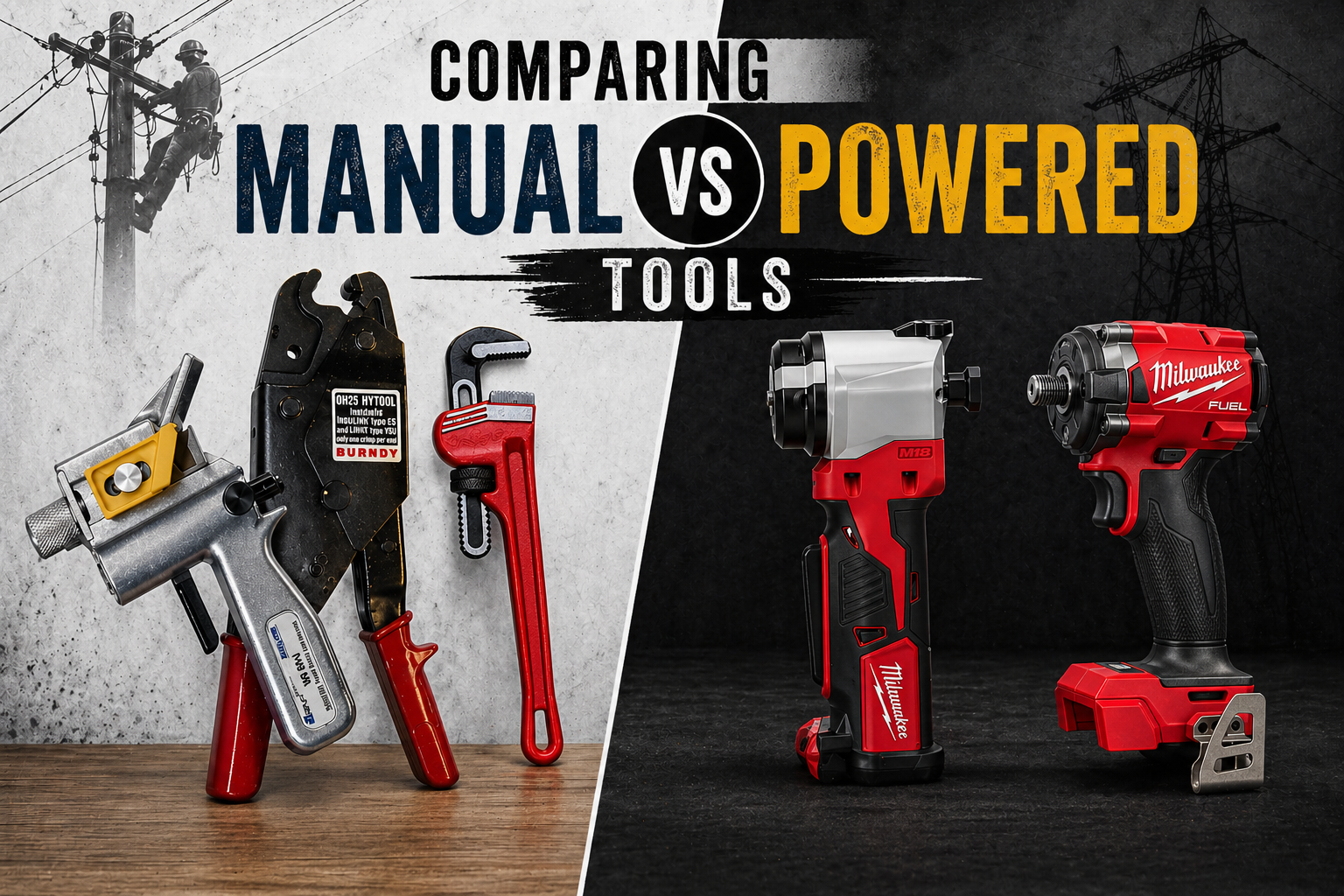
Let’s first take a look at the man-powered tools. Manual tools are hand-operated devices that often require more physical effort to use. Common examples include hand cutters, crimpers, wrenches, pliers, and cable stripping tools.
Pros of Manual Tools
- Reliability and Durability
Manual tools are highly reliable in the field. With fewer moving parts and no dependence on batteries or motors, they are less prone to failure, especially in harsh weather conditions. This is particularly valuable for linemen working in remote or emergency restoration environments. - Lower Initial Cost
Manual tools are generally more affordable than powered alternatives. This makes them attractive for organizations managing tight budgets or equipping large crews. - Portability
Without the need for batteries, chargers, or power sources, manual tools can be lighter and easier to transport. This can be a significant advantage when climbing poles or working in confined spaces. - Greater Control and Precision
For delicate tasks, manual tools often provide better tactile feedback, allowing linemen to apply precise force and avoid damaging components.
Cons of Manual Tools
- Physical Strain
Manual tools can require significant physical effort, especially for repetitive or heavy-duty tasks like cutting thick cables. - Lower Efficiency
Tasks performed manually typically take longer, which can slow down project timelines, particularly in large-scale operations. - Inconsistent Output
Results can vary depending on the operator’s strength and technique, which may lead to inconsistencies in tasks like crimping or cutting.
What Are Powered Lineman Tools?
Powered tools use electricity, hydraulics, or battery systems to perform tasks. Examples include hydraulic crimpers, battery-powered cutters, and impact wrenches.
Pros of Powered Tools
- Increased Productivity
Depending on the job, powered tools can significantly reduce the time required to complete tasks. For example, a battery-powered cutter can slice through thick cable in seconds, compared to the effort required with manual cutters. This efficiency is critical in outage restoration and large infrastructure projects. - Reduced Physical Strain
By automating force-intensive tasks, powered tools minimize the physical burden on linemen. - Consistent Performance
Powered tools increase the probability of a lineman delivering uniform results, which is particularly important for tasks requiring precision and compliance with safety standards, such as crimping connectors. - Capability for Heavy-Duty Applications
Certain tasks, like cutting high-capacity conductors or compressing large connectors, are simply impractical with manual tools. Powered tools make these operations feasible and efficient.
Cons of Powered Tools
- Higher Upfront Investment
Powered tools come with a significantly higher purchase cost. In addition, organizations must account for ongoing expenses such as battery replacements, maintenance, and repairs. - Maintenance Requirements
Powered tools require regular maintenance to ensure optimal performance more frequently than manual tools. Batteries degrade over time, and hydraulic systems may need servicing. - Dependence on Power Sources
Battery life and charging logistics can limit usability, especially in remote areas. If a battery fails mid-task, it can disrupt workflow unless backups are available. - Increased Weight and Complexity
Powered tools are often heavier and more complex, which can make them harder to handle in certain situations, such as working at height.
Safety Considerations
Both manual and powered tools have safety implications. Manual tools reduce the risk of mechanical failure but may increase strain-related injuries. Powered tools, while reducing physical effort, introduce risks related to electrical components, hydraulic pressure, and tool malfunction.
Organizations should align tool selection with established safety guidelines. For example, OSHA emphasizes the importance of using properly maintained tools and ensuring workers are trained in their safe operation (Occupational Safety and Health Administration, “Hand and Power Tools Safety Standards”).
When to Use Each Type
The decision between manual and powered tools should be context-driven:
- Manual tools are ideal for light-duty tasks, precision work, and situations where portability and reliability are critical.
- Powered tools are better suited for high-volume, repetitive, or heavy-duty applications where efficiency and consistency are priorities.
A hybrid approach is often the most effective. Many crews equip themselves with both types, using manual tools as backups or for specific tasks while relying on powered tools for demanding operations.
Both manual and powered lineman tools play a critical role in modern utility work. Manual tools offer durability, affordability, and control, while powered tools deliver speed, consistency, and reduced physical strain. The most effective strategy is not choosing one over the other, but understanding how to deploy each where it provides the greatest value.