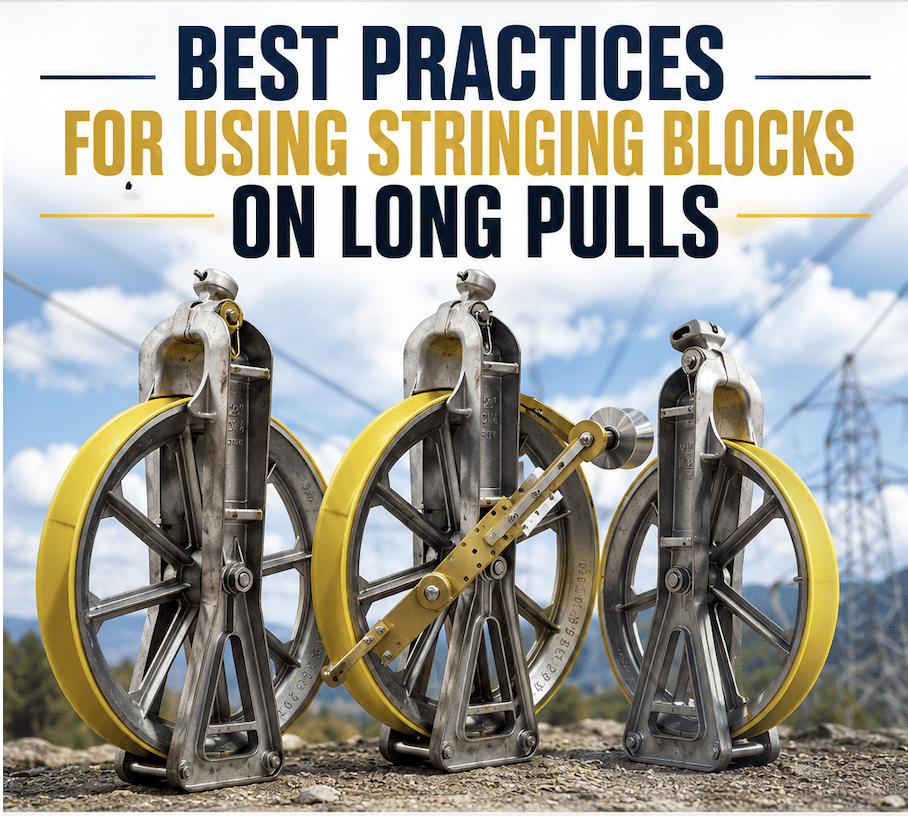
When you’re running long pulls, there’s no room for shortcuts. The distance alone magnifies every small mistake, friction builds, tension spikes, and what felt smooth at the start can turn into a problem fast. Stringing blocks aren’t just part of the setup; they’re what keep the entire operation controlled, efficient, and safe from start to finish.
If you want clean pulls and a crew that stays ahead of the job instead of reacting to it, these best practices matter.
1. Start With the Right Block for the Job
Not all stringing blocks are built the same, and long pulls demand more than a basic setup. You need to match the block to both the conductor and the conditions.
Focus on:
- Sheave diameter: Larger diameters reduce bending stress on the conductor
- Material: Aluminum for lighter jobs, lined or nylon for protecting sensitive conductors
- Load rating: Always exceed expected tension: long pulls increase load unpredictably
A mismatch here creates friction you’ll fight for the whole job. Get it right up front, and everything else gets easier.
2. Prioritize Proper Spacing
On long pulls, spacing is critical. That includes controlling sag, tension, and alignment across the entire run.
Too much distance between blocks leads to:
- Excessive conductor sag
- Increased friction at each contact point
- Higher pulling tension overall
A good rule of thumb is to tighten spacing in areas with elevation changes, corners, or longer spans. Consistency across the line keeps the pull as predictable as possible
- Align Everything Before You Pull
Misalignment is one of the most common and costly mistakes on long pulls.
Every block should:
- Be square to the direction of pull
- Allow the conductor to enter and exit cleanly
- Avoid forcing the conductor to rub against the side plates
Even slight misalignment creates drag. Over distance, that drag compounds into real tension increases and unnecessary wear on your conductor.
Take the extra time to sight down the line before you start. It pays off.
4. Keep Blocks Clean and Free-Spinning
It sounds basic, but on long pulls, small inefficiencies add up fast.
Before pulling:
- Inspect each block for debris, dirt, or buildup
- Ensure the sheaves spin freely without resistance
- Check for worn bearings or damaged grooves
A single sticky block can increase tension across the entire system. Multiply that by dozens of blocks, and now you’ve got a serious problem.
Clean, smooth rotation keeps your pull controlled and your equipment working with you, not against you.
5. Manage Tension as It Matters, Because It Does
Long pulls demand constant awareness of tension. It’s not a “set it and forget it” situation.
Best practices include:
- Using tensioners and pullers matched to the load
- Monitoring tension throughout the pull, not just at the start
- Avoiding sudden starts or stops that shock-load the system
Steady, controlled movement is the goal. Jerky pulls increase stress on the conductor, the blocks, and the entire setup.
6. Protect the Conductor at All Costs
The longer the pull, the greater the opportunity for damage. And once the conductor is compromised, you’re dealing with bigger issues than just efficiency.
To protect it:
- Use lined blocks when running sensitive or high-value conductors
- Watch for sharp angles or transitions
- Avoid ground contact at all times
Every point of contact matters. Long pulls amplify wear, so minimizing friction and impact should always be the top priority.
7. Communicate Across the Entire Crew
Long pulls stretch more than just wire; they stretch communication. When crews are spread out, clarity becomes critical.
Make sure:
- Everyone understands the pull plan before starting
- There’s clear communication between tensioning and feeding points
- You have a plan for stopping quickly if something goes wrong
One missed call or a delayed response can turn into equipment damage or a safety risk. Stay connected and stay ahead.
8. Plan for Terrain and Conditions
Every long pull is different. Terrain, weather, and layout all play a role in how your blocks perform.
Adjust for:
- Elevation changes (increase spacing control and tension monitoring)
- Wind conditions (affects conductor movement and stability)
- Obstacles or crossings (require additional support or specialty blocks)
The best crews plan for conditions to go wrong instead of reacting to the inevitable.
9. Inspect Everything After the Pull
The job isn’t done when the conductor is in place. Long pulls put stress on every component in your system.
After completion:
- Check blocks for wear or damage
- Inspect the conductor for scuffing or deformation
- Identify any points where tension or alignment caused issues
The best crews understand they can learn from every job, good or bad. This step isn’t just about finishing the job; it is an opportunity to learn and improve the next pull.
Long pulls don’t reward speed: they reward precision.
Every detail compounds over distance. Alignment, spacing, tension, communication, and a hundred other factors all stack up. Keeping a keen eye on those details ensures you’re controlling the pull from start to finish.