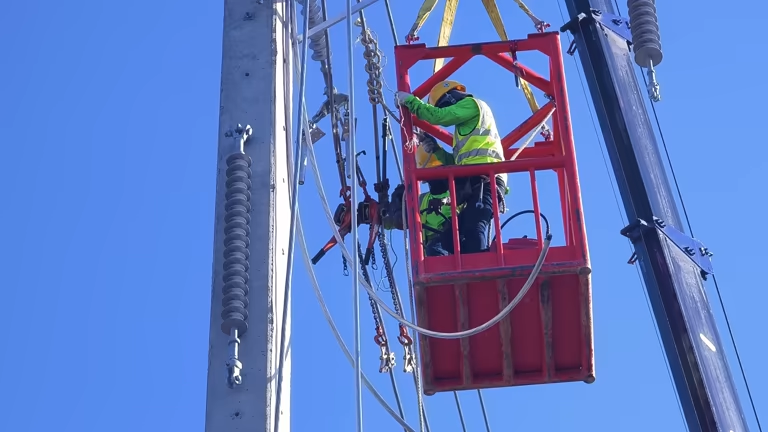
When a crew is lifting a transformer, tensioning conductor, setting a pole, or moving material, every component in the system has a limit. Knowing those limits—and understanding how jobsite conditions affect them—is essential to completing the work safely.
A load rating is more than a number stamped on a tool. It represents the maximum load the manufacturer has authorized the equipment to handle under specified conditions. Exceeding that rating can cause equipment failure, dropped material, serious injuries, or worse.
For linemen, understanding load ratings means knowing what the numbers mean, how forces change during an operation, and why the lowest-rated component controls the entire system.
Key Load-Rating Terms
Several similar terms appear on rigging equipment, pulling tools, hoists, slings, shackles, and other line-construction products. They should not be treated as interchangeable without consulting the manufacturer.
Working Load Limit (WLL): The maximum load a product is authorized to support during normal service when used as designed. This is usually the most important number when selecting equipment for a job.
Rated Capacity: The maximum load equipment can safely handle under the conditions specified by its manufacturer. Rated capacity may depend on configuration, direction of pull, boom position, hitch type, or other factors.
Proof Load: A controlled force applied during testing to verify that a product meets manufacturing requirements. A proof-load value is not permission to use the equipment at that load in the field.
Ultimate or Breaking Strength: The force at which a component is expected to fail or become unable to support the load. Breaking strength should never be used as the working capacity.
Design Factor: The ratio between a component’s ultimate strength and its rated working capacity. The design factor provides a margin between normal use and failure, but it is not extra capacity available to the crew.
The System Is Only as Strong as Its Lowest Rating
A lifting or pulling setup may include a hoist, sling, grip, shackle, block, rope, connector, and anchor point. Each component may have a different load rating.
The capacity of that system is determined by its weakest component—not its strongest.
For example, connecting a 4-ton hoist to a shackle rated for 2 tons does not create a 4-ton system. The shackle limits the setup to 2 tons, assuming every component is properly configured and no other condition reduces its capacity.
Before beginning work, crews should confirm the rating of every item in the load path. Ratings should be legible and traceable to the manufacturer. OSHA prohibits using rigging equipment without the required identification markings and prohibits loading slings beyond their recommended safe working loads.
Configuration Can Change Capacity
The number on a tag or tool is only the starting point. How equipment is used can significantly affect its available capacity.
Sling angles are one common example. As the angle between the sling legs decreases, tension on each leg increases. A shallow sling angle may place far more force on the sling and attachment points than the weight of the load alone suggests.
Hitch configuration also matters. A sling used vertically may have a different capacity when used in a choker or basket hitch. Shackles and hooks are generally designed for in-line loading. Side loading, point loading, or loading a hook latch instead of the bowl can reduce capacity and damage the equipment.
Blocks introduce additional forces as the line changes direction. Anchor points must be selected based on the resulting load, not simply the amount of tension in the rope. When calculating these forces, crews should follow manufacturer load charts, utility procedures, and the approved rigging plan.
Account for Dynamic and Environmental Forces
A load does not always remain static. Shock loading can occur when a load drops, shifts, snags, or is started and stopped abruptly. The resulting force can be substantially greater than the load’s actual weight.
Wind, ice, conductor tension, uneven terrain, temperature extremes, and contaminated or corrosive environments can also affect an operation. Equipment ratings commonly assume normal environmental conditions and proper use. Extraordinary conditions may require different equipment, a reduced working capacity, or guidance from a qualified person.
OSHA requires mechanical equipment used to lift or move lines and materials to remain within its maximum load rating and other design limitations for the conditions in which it is used.
Inspect Before Every Use
Even correctly rated equipment can become unsafe through wear or damage. Before use, inspect equipment for:
- Missing or illegible rating tags
- Cracks, bends, stretching, or deformation
- Cuts, burns, broken fibers, or damaged stitching
- Excessive wear or corrosion
- Damaged hooks, latches, pins, or threads
- Unauthorized welding or modifications
- Signs that the equipment has been overloaded
OSHA requires slings and their attachments to be inspected each day before use by a designated competent person. Defective equipment must be removed from service immediately—not marked for “light duty” or returned to the truck for later use.
Make Load Ratings Part of the Job Briefing
Load planning should happen before equipment is under tension. The job briefing should identify the expected load, equipment ratings, rigging configuration, anchor-point capacity, environmental hazards, inspection responsibilities, and communication signals.
If the load is unknown, a rating is unreadable, or the configuration falls outside the manufacturer’s instructions, stop and get clarification. Never estimate capacity based on a tool’s appearance or assume that equipment is safe because it handled a similar load before.
Understanding load ratings helps linemen make better decisions before the pull begins or the load leaves the ground. The right equipment, properly inspected and correctly configured, protects the crew, the system, and everyone working nearby.
Always follow the equipment manufacturer’s instructions, your employer’s procedures, the approved rigging plan, and applicable regulations. See OSHA’s requirements for rigging equipment and mechanical equipment used in power-line work.