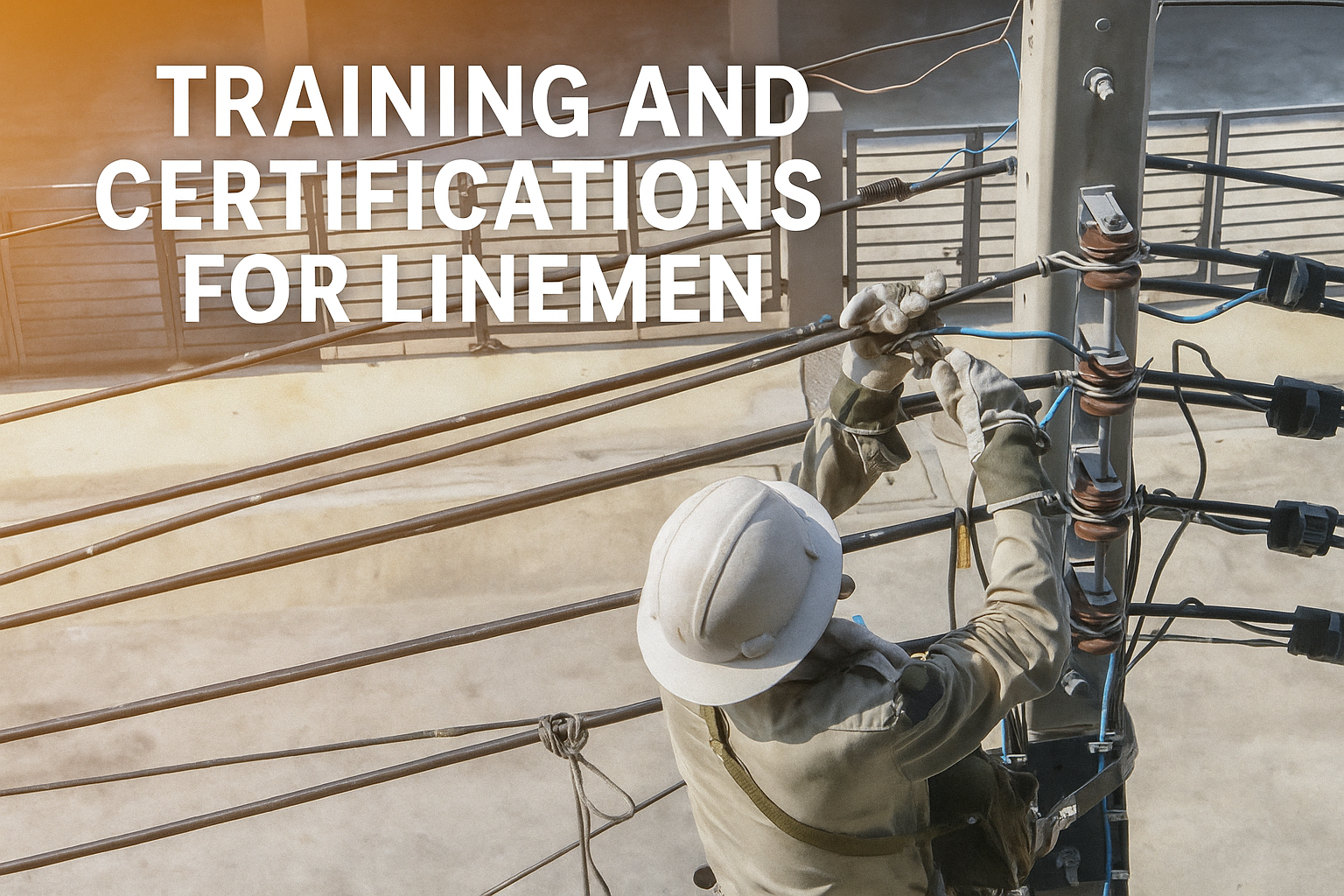
The work of a power lineman is not just another job – it’s a career built on skill, safety, and precision. Linemen are responsible for installing, maintaining, and repairing the electrical power systems that keep communities running. It’s a demanding profession, one that requires physical strength, technical knowledge, and a mindset focused on safety. But before someone can climb poles and string lines, they need the right training and certifications.
Whether you’re considering becoming a lineman or you’re an employer looking to guide recruits, understanding the linemen training and certifications required is crucial. This post outlines the path to becoming a lineman and the credentials that matter most in the industry.
1. The Foundation: Education and Prerequisites
The first step in becoming a lineman begins with a high school diploma or GED. While it may sound basic, this foundation is essential, as it provides the groundwork for the math, science, and problem-solving skills linemen rely on daily. Subjects like algebra, trigonometry, and physics play a role in understanding electrical theory and line work mechanics.
Beyond academics, aspiring linemen need to meet certain physical and personal qualifications. This includes:
- Physical fitness – Linemen climb poles, lift heavy equipment, and work in all weather conditions.
- Comfort with heights – Climbing 40 feet or more in the air is a regular part of the job.
- Color vision – The ability to distinguish between color-coded wires is critical.
- Attention to detail – Mistakes in line work can be dangerous for the lineman and the community.
Meeting these baseline requirements ensures candidates are ready for the demanding training ahead.
2. Technical Training: Learning the Trade
While some linemen learn on the job, the majority today enter through technical schools or pre-apprenticeship programs. These programs provide a structured introduction to the trade and often make candidates more competitive when applying for apprenticeships.
Pre-Apprenticeship Programs
Many community colleges and trade schools offer lineman pre-apprenticeship programs. These typically last 12–18 weeks and cover:
- Electrical theory
- Pole climbing and safety
- Rigging and knot tying
- Equipment operation
- Basic first aid and CPR
Completing one of these programs shows employers that a candidate is serious about the trade and has a strong foundation to build on.
Lineworker Training Schools
Some schools specialize entirely in lineworker training. These programs are more intensive, often including hands-on practice with energized lines, bucket trucks, and real-world equipment. Graduates leave with a certificate and practical skills that translate directly to the job site.
3. Apprenticeship: The Core of Lineman Training
For most linemen, the Joint Apprenticeship and Training Committee (JATC) program or a utility company apprenticeship is the main gateway into the trade. Apprenticeships typically last 3–4 years and combine classroom instruction with paid on-the-job training.
During an apprenticeship, linemen learn:
- Advanced electrical systems
- Transmission and distribution line work
- Transformer connections
- Underground systems
- Safety standards and fall protection
Apprentices work under the guidance of journeymen linemen, gradually taking on more responsibility as their skills grow. Upon completion, apprentices become journeyman linemen, fully licensed to work independently.
4. Certifications That Matter
Certifications help linemen prove their skills, comply with industry standards, and improve job opportunities. Some of the most important certifications include:
OSHA Safety Certifications
The Occupational Safety and Health Administration (OSHA) requires linemen to complete safety training. Most employers require at least an OSHA 10 or OSHA 30 certification, which covers hazard recognition, fall protection, electrical safety, and emergency procedures.
CPR and First Aid
Because linemen work in dangerous environments, CPR and first aid certification is a must. Many programs also require AED (Automated External Defibrillator) training.
CDL (Commercial Driver’s License)
Linemen often operate heavy trucks and bucket trucks. A Class A or Class B CDL is often required for employment.
NCCER (National Center for Construction Education & Research)
NCCER offers a Power Line Worker certification that standardizes training across the industry. It covers climbing, safety, equipment operation, and electrical knowledge. Many employers recognize this as a mark of quality training.
Journeyman Lineman License
Once an apprenticeship is complete, linemen must pass a journeyman exam to earn their license. This certification allows them to work without direct supervision.
5. Specialized Training
As linemen progress in their careers, additional training may be required for specialized work. This includes:
- Hot stick and rubber glove training – Working on energized lines safely.
- Underground distribution certification – For urban and suburban power systems.
- Transmission tower climbing certification – For high-voltage lines on tall structures.
- Helicopter line work training – A specialized skill for linemen working on remote transmission lines.
These certifications not only enhance safety but also open the door to higher-paying, more challenging roles.
6. Continuing Education
Lineman training doesn’t stop once a journeyman card is earned. Technology, equipment, and safety standards evolve constantly, and continuing education ensures linemen stay current. Many employers require refresher courses every few years, particularly in:
- Safety standards
- Equipment operation
- New electrical systems
- Emergency procedures
A commitment to lifelong learning keeps linemen safe and employable in a competitive field.
7. Why Training and Certification Matter
At first glance, training and certification might seem like hurdles to jump before getting on the job. But in reality, they are the lifeline of the profession. They:
- Keep linemen safe – Working around high voltage and extreme heights is inherently dangerous. Training ensures risks are minimized.
- Ensure reliability – Communities rely on electricity. Well-trained linemen keep the power on.
- Boost career opportunities – Certifications set linemen apart, making them more valuable to employers.
- Strengthen the industry – A workforce trained to the same high standards raises safety and performance across the board.
The path to becoming a lineman is not a quick or easy one. It takes years of training, hands-on experience, and a commitment to safety. But for those willing to put in the work, the rewards are worth it – good pay, strong job security, and the pride of keeping the lights on for entire communities.
If you’re considering this career, start by researching local apprenticeship opportunities, JATC programs, and lineworker schools. If you’re already in the trade, don’t underestimate the value of additional certifications. They may be the key to advancing your career and staying safe on the line.
Being a lineman is more than a job – it’s a calling. And like all callings, it demands preparation, dedication, and ongoing growth.