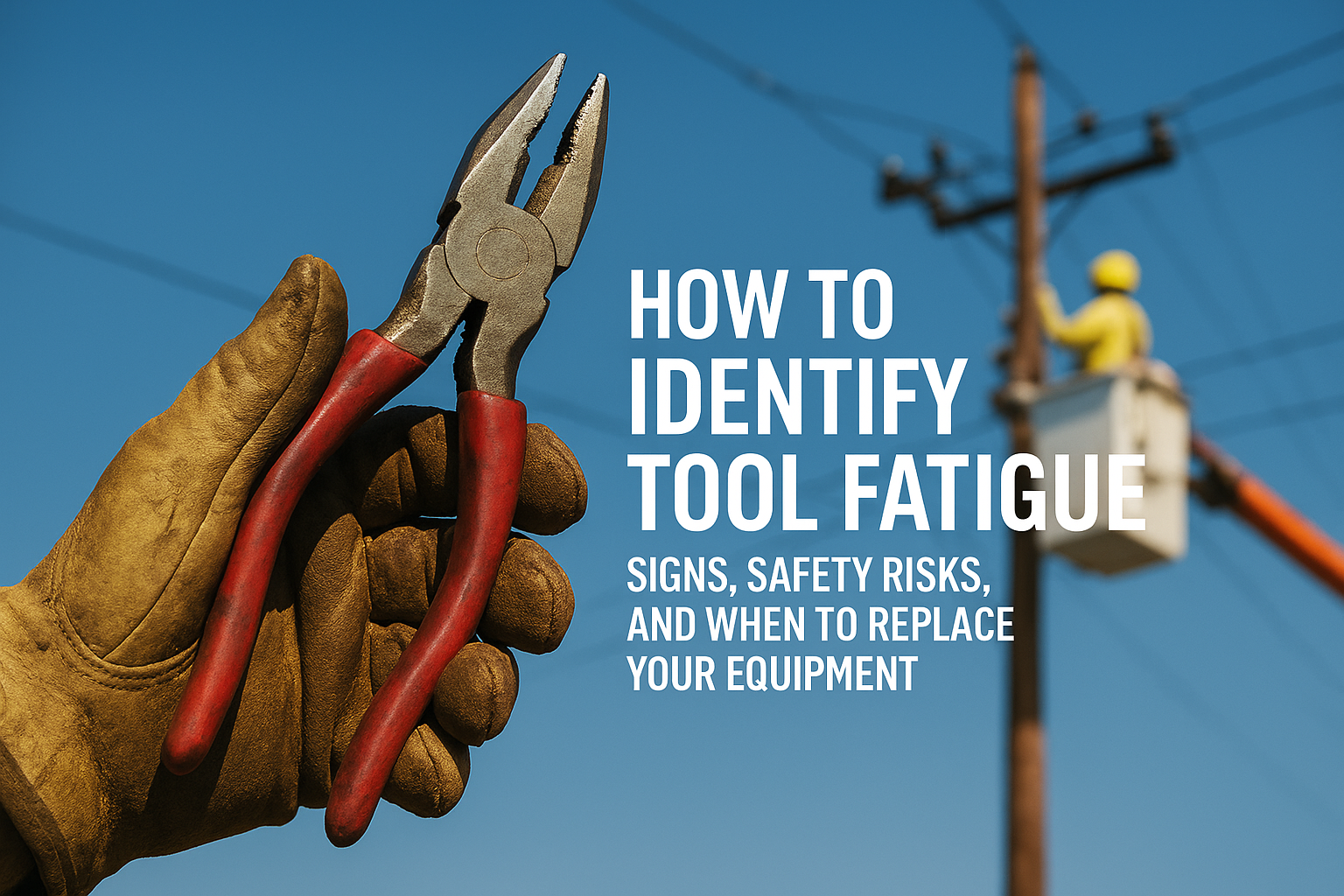
Every lineman knows their tools are more than just gear – they’re lifelines. Day in and day out, they endure extreme conditions, high voltages, and heavy physical stress. But even the best-made tools have limits. Over time, materials weaken, handles crack, and metal fatigues. Recognizing these signs before a failure occurs isn’t just smart maintenance – it’s critical for safety and job performance.
In this guide, we’ll break down how to identify tool fatigue, why timely replacement matters, and how to keep your gear in top shape for the long haul.
What Is Tool Fatigue?
Tool fatigue happens when repeated use, exposure to harsh elements, and mechanical stress cause a tool’s materials to gradually weaken. Unlike visible damage, fatigue often starts beneath the surface – making it tricky to spot until the problem becomes serious.
For linemen, whose work depends on absolute reliability from every wrench, clamp, and hot stick, tool fatigue can spell danger. A compromised tool could slip, crack, or fail under load, risking injury and electrical hazards.
Common causes of tool fatigue include:
- Overuse or heavy loads: Tools designed for moderate use can degrade quickly under constant, high-tension work.
- Environmental exposure: UV rays, moisture, and temperature swings all break down insulation, grips, and coatings over time.
- Improper storage: Leaving tools in damp environments or direct sunlight accelerates corrosion and material degradation.
- Lack of maintenance: Dirt, oil, and oxidation slowly eat away at moving parts and fasteners.
Warning Signs: How to Spot Tool Fatigue Early
Identifying tool fatigue requires a combination of visual inspection, hands-on testing, and awareness of performance changes. Here’s what to watch for:
1. Visible Wear and Cracks
Inspect tools regularly for cracks, chips, or corrosion – especially along load-bearing points like jaws, hinges, and sockets. Even small fractures can spread quickly when under stress.
Hot sticks and insulated tools should be checked for discoloration, blistering, or surface pitting. Any sign of insulation breakdown means the tool is unsafe and must be removed from service immediately.
2. Loose or Worn Moving Parts
Pliers, cutters, and crimpers that develop excessive play or fail to align properly are showing internal wear. If tightening or lubrication doesn’t fix it, the tool is nearing the end of its service life.
3. Handle or Grip Deterioration
Rubber or composite grips harden, crack, or peel over time – especially in tools exposed to sun and heat. Damaged grips not only reduce comfort but can also compromise electrical insulation and control.
4. Performance Decline
A lineman’s instincts are sharp. If a tool feels “off” – for example, a wrench slips more often, or cutters require extra force – it may be a sign of internal fatigue or deformation.
5. Failed Dielectric Testing
Insulated tools should undergo regular dielectric testing according to manufacturer or OSHA guidelines. If a tool fails, it’s a non-negotiable: remove it from circulation immediately.
When to Repair vs. Replace
Not every worn tool needs to be tossed. Knowing when to repair versus replace saves both money and downtime.
Repair when:
- Wear is superficial (light surface rust or minor grip damage).
- The tool passes inspection after cleaning and lubrication.
- Replacement parts (like springs or grips) are readily available from the manufacturer.
Replace when:
- Cracks, deep corrosion, or bends are visible.
- The tool has been dropped from a height or subjected to an electrical flash.
- It fails dielectric or load testing.
- The cost of repair exceeds half the price of a new tool.
A good rule of thumb: if you’re questioning its safety, it’s time to replace it. No savings justify risking injury or equipment damage.
Extending Tool Life: Best Practices
Proactive maintenance is the key to keeping tools reliable. Here are some field-proven habits that extend tool longevity:
1. Clean After Every Use
Wipe tools free of grease, grit, and moisture. A clean surface prevents corrosion and makes it easier to spot developing issues.
2. Store Properly
Always store tools in a dry, temperature-controlled space. Use protective cases or racks to prevent unnecessary impact or exposure to sunlight and chemicals.
3. Schedule Regular Inspections
Build a monthly or quarterly inspection routine. Many linemen mark tools with inspection dates or use a checklist to track condition over time.
4. Follow Manufacturer Guidelines
Every tool has a rated service life and maintenance interval. Adhering to those recommendations ensures compliance with safety standards and avoids unexpected failures.
5. Rotate Tools
Avoid using the same few tools day after day. Rotating your set helps distribute wear evenly and keeps backups in ready condition.
Why Timely Replacement Matters
Replacing tools before they fail might seem costly, but in the long run, it saves far more – both in time and safety. A single equipment failure can lead to:
- Lost productivity from delays or accidents.
- Costly damage to work lines or components.
- Potential injury or worse.
Lineman work is demanding, and reliability is everything. Having confidence in your tools allows you to focus on the job, not worry about whether your gear will hold up. When each clamp, cutter, or block performs as expected, crews can work faster, safer, and more efficiently.
Tool fatigue is inevitable – but preventable. The best linemen treat their tools like partners on the line: cared for, respected, and never pushed beyond their limits. By learning to recognize early warning signs and knowing when to retire aging gear, you’re investing in both safety and craftsmanship.
Your tools tell a story. Keep them strong, and they’ll keep you safe – one climb, one connection, and one high-voltage line at a time.