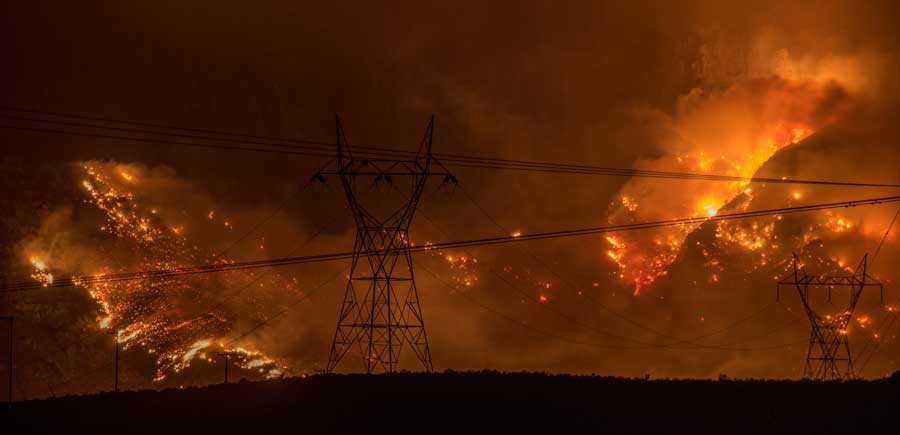
If you wanted to create a recipe for disaster, the beginning of the 2021 wildfire season would be a good place to start. Nearly 90% of the western U.S. suffered through extreme drought. The snowpack set new low levels there as well. A record-breaking heatwave steamrolled the Pacific Northwest with extreme temperatures hitting 116 °F in Portland. Mix all of this together, and it was a tinderbox ready to explode.
The last decade has been brutal as wildfires have raged across the West, Southwest, and Southern states. Wildfire season is here, and that means linemen and other utility employees will be dispatched to restore power during dangerous events and in extreme environments.
Below we’ve listed a few things linemen should think about to stay safe on the job in areas impacted by a wildfire. We’ve also included a Wildfire Drag Bag packing list in case you’re called away for several days.
What linemen should know to stay safe
A public utility company operating in an area prone to wildfires should have strategies and procedures in place to keep linemen and crews safe in dangerous situations. Make sure you follow them to a T.
Safety can be fleeting. Even when a fire has left the area or been extinguished, it can come roaring back. To help you keep your head in the game, check out the following topics to sharpen your situational awareness.
Beat back the heat
The wildfire season happens to occur during the hottest season in North America, too. So, not only will you face extreme summertime temperatures, but you’ll also have to contend with the heat from the fire. While you might not be in the thick of it, an average surface fire, according to the University of Utah, can reach 1,472° F or more.
To get a leg up on the heat, you first need to acclimate. Some crews drive to a site with the AC off so the heat isn’t a shock when they step out of the truck. And of course, water is of utmost importance.
Per OSHA, linemen working in extreme heat should drink a liter of water over one hour, which is about one cup every fifteen minutes. You’ll also need to rest, ideally in the shade, consistently and keep an eye on your crew to protect against heatstroke.
Where there’s smoke, there’s carbon monoxide
Most people love the smell of a campfire, but a wildfire takes the idea of smoke to a whole other level. Wildfire smoke contains several chemical compounds, but the most dangerous is carbon monoxide, a colorless, odorless, tasteless gas that can injure or kill. CO poisoning can occur when a person is exposed to elevated levels, which means linemen in the midst of a wildfire need to watch out for these symptoms: dull headache, dizziness, confusion, blurred vision, shortness of breath, and nausea or vomiting.
PPE, including respirators, is essential. So is limiting a lineman’s time in the field when near a wildfire. According to the University of Utah, areas even a few hundred yards downwind of the fire where there are high particulate smoke levels typically don’t have high levels of carbon monoxide.
Take it one step at a time
Wildfires can occur in many places, but typically the big, nasty ones that threaten utility lines and homes are in hilly, rugged terrain. And while a hillside might look pleasant and inviting when covered in forest, it’s a different story up close after a fire. The first thing to do before you tackle an incident is to conduct pre-incident disaster response planning and ensure that the whole crew knows the plan and territory.
After a burn, boulders, rocks, and uneven ground are exposed, possibly shrouded in smoke. These hazards increase a lineman’s chances of tripping and falling. Throw in a downpour, and you have a muddy, slippery slope with a chance of a flash flood. To refresh your memory on how to prevent slips and falls, check out OSHA’s handy PDF.
When driving to a site, your view can be seriously diminished by smoke and high winds, hiding a treacherous curve ahead. Falling trees and debris from hillsides are other dangers to watch out for. To bring the reality home, in 2018, a fellow lineman was killed in an off-road vehicle accident while making repairs in an area destroyed by the Carr Fire.
Wildfire Drag Bag Packing List
Wearables
Pack enough for two weeks. And be sure to roll, not fold your clothes. You’re not going on a Caribbean cruise with a pair of trunks and flip-flops. You’ll need every inch of space in your backpack, suitcase, or duffle bag, and rolling helps the best for that.
▢ Foul weather, flame-resistant (FR) jacket, like these from Tingley and NASCO.
▢ FR pants and shirts
▢ Workboots
▢ Fleece, sweatshirts, gloves, etc., depending on the season or environment
▢ T-shirts
▢ Underwear
▢ Tough work socks with a reliable wicking blend of material
▢ Shorts
▢ Shoes, casual or running shoes, flip flops
▢ Poncho or lightweight rain gear when not working
Food & Snacks
Take nonperishables along for the ride. You’ll want canned and packaged goods that can withstand the heat, humidity, and overall difficulty of the situation, and packed with protein. Of course, this is just a list of suggestions. Follow your tastebuds.
▢ Water, water, water
▢ Hydrating drinks in powder form, like Gatorade
▢ Canned goods, like tuna, chicken, etc.
▢ Protein and/or granola bars
▢ Summer sausage
▢ Cheese, crackers
▢ Trail mix
▢ Jerky
▢ Peanut butter
Keepin’ it Clean
We know it’s not the Army, but ordering yourself to maintain personal hygiene is a good idea when you’re in challenging, dirty situations. You’ll feel better, not to mention smell better, when you take care of your mouth, butt, and feet.
▢ Prescriptions and medicine
▢ Toothbrush and paste
▢ Razor and shaving gel or use body wash to save packing space
▢ Deodorant
▢ Body wash that can be used as shampoo and soap
▢ Towel and washcloth or loofah if that’s your thing
▢ Sunscreen
▢ Lotion for dry or irritated skin
▢ Medicated body powder because it can get muggy
▢ Mouthwash
▢ Q-tips
Indispensables
From bug spray to cash and batteries, you’ll want a few things on hand to make life easier. And don’t forget, we live in modern times, which means you’ll need all eight of your chargers because nothing is compatible.
▢ Wallet, cash, etc.
▢ Glasses and sunglasses
▢ Contacts and contact solution
▢ Bug spray, insect repellent
▢ Sleeping bag
▢ Air mattress
▢ Small, portable hammock
▢ Small pillow and packable blanket
▢ Chargers for car and hotel if electricity is available
▢ Powerbank or portable chargers in case electricity isn’t available
▢ Durable flashlight and headlamp, (we like these) plus extra batteries
▢ Solar charger
▢ Tent if needed
▢ Laundry bag
▢ Change, like quarters for vending and laundry machines
▢ First aid kit
▢ Ear Plugs
▢ Dry bag to haul items around in
Whether it’s just another lovely day on the job or the ground is sooty and smoke hangs in the air, it’s always best to be prepared. From hygiene to comfort and personal safety, you want your things at your side, not on the kitchen counter where you left them three states away.
Be sure to use this Wildfire Drag Bag list next time. And for your built-to-last items, like flashlights and FR gear, you can count on DDIN and Tallman Equipment Company.