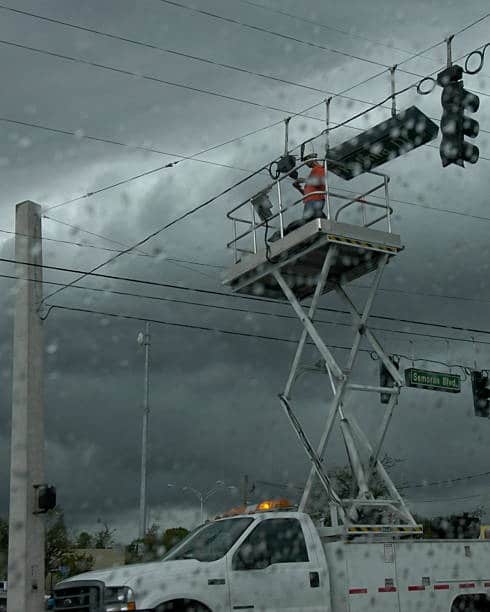
When inclement weather strikes, we call on linemen across the nation to restore our sense of normal. Ironically, that same force that makes their work so invaluable adversely affects the tools they need to do their best work. Harsh and often unpredictable weather conditions that linemen face daily can significantly impact the performance and longevity of their tools. Understanding how weather affects these tools is essential not only for maintaining operational efficiency but also for ensuring safety and cost-effectiveness over time.
Weather Challenges in Power Lineman Work
Power linemen work outdoors year-round, exposed to a wide range of weather conditions, including extreme heat, cold, rain, snow, ice, and high winds. Each condition presents unique challenges that affect the tools linemen rely on, from climbing gear and insulated gloves to voltage testers.
Tools designed for the rigors of electrical line work must withstand these elements without compromising performance. When weather conditions degrade tools prematurely or affect their reliability, it can cause delays, increase repair or replacement costs, and, most importantly, put the lineman’s safety at risk.
Effects of Extreme Temperatures
Heat
High temperatures can cause metals to expand and plastics or rubber components to soften or degrade. For example, insulated hand tools and gloves may lose some of their protective qualities when exposed to intense heat for prolonged periods. Rubber insulation can crack or become brittle after repeated thermal stress, diminishing its effectiveness in protecting against electrical hazards.
Heat can also affect batteries in cordless power tools, causing them to overheat and reduce their charge cycles. This means linemen may face downtime waiting for batteries to cool or recharge, slowing work progress.
Cold
Conversely, cold temperatures cause materials to contract and can make plastics brittle and prone to cracking. When working in freezing conditions, linemen may notice their tools becoming less flexible, which can impair handling and increase the risk of tool failure during critical tasks.
Cold weather also affects lubricant viscosity in mechanical tools, making them stiffer and harder to operate. This extra resistance can cause more wear and tear on moving parts, shortening the tool’s operational life.
The Impact of Moisture and Humidity
Rain and Snow
Snow days? Not in the job description for linemen. Moisture is one of the most common and damaging elements for power lineman tools. Water intrusion can cause metal components to rust or corrode, especially if tools are not properly dried and maintained after exposure. Corrosion not only weakens the structural integrity of the tool but can also interfere with electrical conductivity or insulation properties, jeopardizing safety.
Water can also seep into battery compartments or electrical parts, leading to shorts, malfunction, or permanent damage. Tools that are not weatherproof or sealed may fail unexpectedly during use in wet conditions, causing critical delays and hazards.
Humidity
High humidity levels accelerate corrosion and degradation of tool components. Tools stored in humid environments without proper ventilation or protective coatings can develop rust faster. This is particularly problematic for steel blades, metal connectors, and the internal parts of complex electrical testing devices.
Wind and Debris
Strong winds often accompany severe weather conditions like storms or cold fronts. Wind can blow dust, dirt, and abrasive particles into tool joints, hinges, and electrical contacts, causing wear and reducing operational smoothness. Abrasive materials can scratch protective coatings or insulation, further exposing the tool to the elements.
Additionally, wind-driven debris poses physical damage risks—tools dropped or knocked from heights can be dented, bent, or broken, resulting in costly repairs or replacements.
Best Practices to Protect Tool Performance and Longevity
1. Choose Weather-Resistant Tools
Investing in high-quality tools designed for harsh weather is fundamental. Many manufacturers now produce weather-resistant or weatherproof power tools, insulated hand tools, and gloves made with materials engineered to withstand temperature fluctuations, moisture, and corrosion.
For example, tools with stainless steel or coated metal parts resist rust better than standard steel. Silicone or neoprene coatings can improve resistance to water and cold cracking on handles and insulation.
2. Proper Storage and Maintenance
After each job, especially in adverse weather, tools should be cleaned, dried, and stored in a climate-controlled environment when possible. Moisture removal and lubrication of moving parts prevent rust and stiffness.
Routine inspection and maintenance should include checking for cracks, corrosion, and insulation degradation. Any signs of wear must be addressed immediately to avoid tool failure on the job.
3. Use Protective Covers and Cases
Using protective cases or covers during transport and storage shields tools from dust, moisture, and physical impacts. Linemen working in rainy or snowy conditions should carry waterproof cases or tool bags to reduce exposure during transit and breaks.
4. Battery Care in Extreme Weather
For battery-operated tools, it’s important to store batteries at recommended temperatures and avoid leaving them in extreme heat or cold. Using insulated carrying cases and removing batteries when not in use can extend battery life and reliability.
5. Training and Awareness
Educating linemen about the impact of weather on their tools encourages proactive care and handling. When linemen understand how environmental conditions affect their gear, they’re more likely to adopt protective practices that extend tool life and improve safety.
Looking Ahead: Innovation in Weather-Resistant Lineman Tools
The energy and utilities industry continues to push for innovations in tool design that mitigate weather-related wear. Advances in materials science, such as nano-coatings for corrosion resistance and flexible yet durable insulations, promise to make tools more resilient in extreme environments.
Smart tools equipped with sensors that monitor temperature, humidity, and wear patterns can alert linemen to potential failures before they happen, helping schedule maintenance proactively.
Weather conditions profoundly influence the performance and longevity of power lineman tools. Extreme temperatures, moisture, humidity, and wind can degrade materials, reduce safety features, and shorten tool lifespan, ultimately impacting job efficiency and safety.
By investing in weather-resistant tools, practicing diligent maintenance, and fostering awareness of the weather’s effects, linemen and utility companies can safeguard their most valuable assets, their tools, and ensure they perform reliably no matter the elements.
The future holds promising innovations to empower linemen in all climates further, enhancing safety, productivity, and cost-effectiveness for years to come.