Every component in utility work, from the largest pole to the smallest bracket, plays a vital role in keeping our grids safe, stable, and reliable. For linemen climbing poles or securing hardware, the right mounting attachments make all the difference. Today, we’re spotlighting the mounting-attachment line from DDIN, in our opinion, the best set of US tools and components designed with lineman work in mind.
Why Mounting Attachments Matter
When you’re up on a pole or tower, dealing with wind, weight, tension, vibration, and unpredictable conditions, you need attachments that just won’t fail. The mounting attachments from DDIN provide anchors, brackets, and clevises that support insulators, crossarms, stringing blocks, and more. Their job: hold things in place safely while you do the challenging work of connecting circuits or maintaining lines.
In a forward-thinking utility environment – where uptime and safety are paramount – choosing the right accessories becomes a strategic decision, not just an operational cost. Robust mounting hardware gives you fewer failures, fewer delays, and less risk of revisiting the work you have already completed.
What’s in the DDIN Mounting Attachment Line
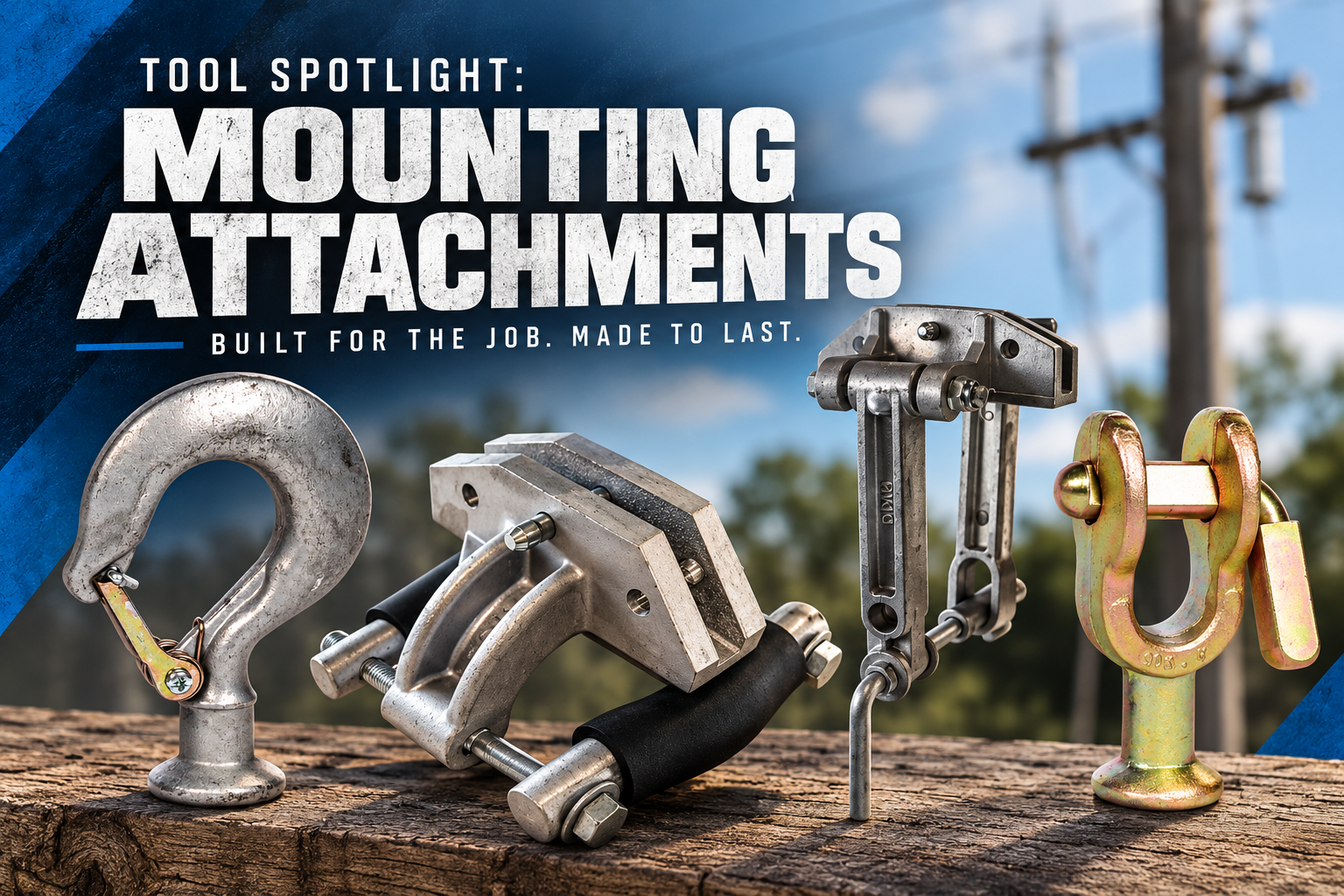
On DDIN’s “Mounting Attachments” page, you’ll find a curated list of items designed specifically for linemen and rigging crews. Some highlights:
- Ball Clevis – a universal attachment point often used to connect blocks or rigging hardware.
- Ball Clevis with Captive Pin – similar to the ball clevis but with a pin retention feature, enhancing safety by preventing accidental disengagement. DDIN
- Crossarm Brackets (various models like DNAB-1, DNAB-2, DNAB-6) – used for mounting CB-Series Universal Stringing Blocks to crossarms in a stable manner. DDIN
- Insulator Brackets (with hand wheel or hex head) – for securing CB-Series Universal Stringing Blocks onto tie top insulators efficiently with different fastening styles. DDIN
- Safety Hook – a quick-connect type of attachment, useful when you need fast, reliable hooking points. DDIN
- Y-Ball Clevis – a variation suited for specific rigging angles or loads. DDIN
Key Features Linemen Should Appreciate
- Purpose-Built for Linemen: DDIN emphasizes that these are “Built for Linemen.” DDIN: That means the design language, load ratings, and usability take into account realities on the pole – rather than being generic hardware.
- Versatility: With multiple sizes and attachment types, you can adapt to different job sites – whether you’re stringing block hardware, installing a new crossarm, or setting insulators.
- Retention Features: Captive pins, hand wheels, and hex heads offer different levels of convenience and security. If you’re on a windy ridge or working in tight spaces, these details matter.
- Made in the U.S.: DDIN’s product page highlights “Made in USA” under their resources. DDIN For many utility crews and contractors, domestic manufacturing can mean quicker lead times, easier support, and better traceability.
- Safety & Efficiency Impact: Better mounting attachment hardware means reduced risk of failures during live stringing or maintenance. Fewer replacements. Fewer surprises.
Real-World Applications
- When you’re stringing conductor across a span and you need to anchor a stringing block to a crossarm, choosing a proper crossarm bracket from DDIN ensures alignment, proper load transfer, and a secure mount.
- On a job where angles are odd or connection points are limited, a Y-ball clevis gives the flexibility to adjust rigging direction while maintaining a secure mount.
Best Practices for Use & Inspection
- Inspect Before Use: Check for deformation, cracks, missing captive pins, or worn threads. Even high-quality hardware needs regular inspection.
- Match Load Ratings to Application: Don’t assume “one size fits all.” Ensure the mounting bracket or clevis you select is rated for the load you’ll be applying – including dynamic loads from wind or conductor movement.
- Tighten Properly: For brackets with hand wheels or hex heads, ensure proper torque is applied for secure seating. Loose attachments can lead to fatigue, vibration damage or even failure.
- Use Compatible Hardware: Ensure the mounting attachment interfaces correctly with the block, clevis, or bracket you’re using. Bad fits lead to stress concentrations.
- Maintain and Keep Records: In utility operations, having a hardware inventory with usage history, inspection dates, and conditions helps with preventive maintenance and lifecycle management.
Looking Ahead
As utility infrastructure evolves – with more complex line systems, higher loads, and higher safety requirements – components like mounting attachments will grow in importance. The trend toward automation, remote monitoring, and predictive maintenance means that hardware failures are less tolerated. Choosing the right attachments today means fewer surprises tomorrow.
The “Mounting Attachments” category from DDIN offers a strong lineup of hardware designed specifically for the lineman community. From ball clevises to crossarm brackets to insulator mounts, these tools enable safer, more efficient installations and maintenance. By focusing on real-world usability, inspection, compatibility, and future-proofing, linemen and crews can stay ahead of challenges and deliver reliable utility infrastructure.