Effective storage isn’t just a convenience; it’s a force multiplier for operational efficiency. When tools and materials are organized, visible, and accessible, teams move faster, waste less time, and reduce risk. In this Tool Spotlight, we’re highlighting a lineup of industrial-grade Steel Wire Baskets designed for rugged performance across job sites, warehouses, and maintenance facilities.
These baskets deliver durability, flexibility, and practical design, and now come in multiple sizes to fit a wide range of storage needs and workflows.
Why Steel Wire Baskets Matter
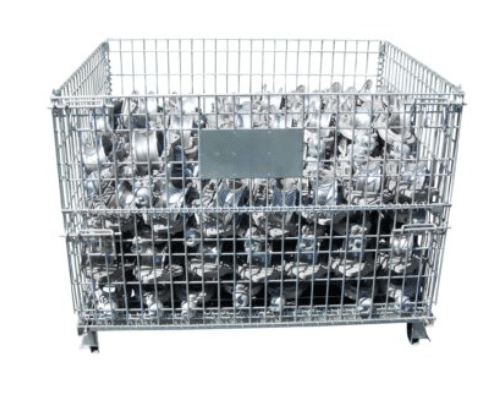
Steel wire baskets blend strength with visibility. Their open-frame design allows teams to see contents at a glance, reducing search time and improving inventory accuracy. Zinc-plated construction resists corrosion, extending service life even in demanding environments. Add features like collapsibility, stackability, and hinged access gates, and you’ve got a storage system built for real-world work.
But not every application is the same, which is why having multiple size options matters.
Available Sizes & Product Links
Here’s a look at the range of steel wire baskets available, with links to their product pages:
- 79.1″ x 43.3″ x 20.6″ Steel Wire Basket – Ideal for longer tools, equipment trays, or oversized components.
- 47″ x 40″ x 20″ Steel Wire Basket – A versatile mid-size option suited for general tool storage.
- 66.9″ x 43.3″ x 23.4″ Steel Wire Basket – Balanced footprint with extended width for larger loads.
- 61″ x 39″ x 49″ Steel Wire Basket – Taller design for vertical storage of longer items.
- 79″ x 43″ x 36″ Steel Wire Basket – Large capacity basket, perfect for bulkier inventory.
- 67″ x 44″ x 41″ Steel Wire Basket – High-volume configuration for flexible warehouse planning.
- 47″ x 40″ x 36″ Steel Wire Basket – Deeper height for increased capacity in a familiar footprint.
Built for Durability
These baskets are constructed with high-strength, zinc-plated steel, engineered to resist corrosion and withstand heavy use. Whether stored indoors or exposed to environmental elements on a worksite, the metal frame holds up to rigorous daily operations.
That reliability translates into a better return on investment, fewer replacements, less downtime, and storage infrastructure that supports, not slows, your teams.
Designed for Efficiency
While strength is foundational, usability is where storage solutions earn their keep. These steel wire baskets include features that tackle common operational challenges:
Collapsible Frames
Space is a premium in every facility. When baskets are not in use, their collapsible frames allow them to fold flat, reducing the footprint needed for storage and lowering transport costs when empty.
Stackable Construction
Vertical space is often left unused. Stackable designs let facilities maximize height without compromising accessibility. Whether you’re organizing bulk materials in a warehouse or staging tools for a project, stackable baskets increase storage density intelligently.
Hinged Access Gates
Access shouldn’t require unpacking half the rack. A hinged gate on the front of each basket lets users reach contents quickly, even in stacked arrangements, eliminating wasted motion and boosting productivity.
Labeling Plates
Integrated steel plates provide a clear and durable surface for identification. Labels improve accountability, support workflows, and help teams move with clarity and confidence.
Visibility That Supports Smart Inventory Management
Unlike solid bins, wire baskets let you see your inventory. This visibility supports more than convenience; it enables:
- Rapid cycle counts
- Visual inventory control
- Quicker daily operations
- Reduced misplacement and loss
Teams that adopt wire baskets often see immediate improvements in material handling efficiency, especially in environments with high tool turnover or diverse parts assortments.
Adaptable Across Industries
Though these baskets are popular in utility and field service applications, their versatility extends across:
- Manufacturing – parts staging, assembly support
- Warehousing – bulk storage, cycle organizing
- Construction – tool staging, material sorting
- Maintenance & Repair – organized bins for frequent access
Their range of sizes makes them adaptable to nearly any storage requirement, from compact tool organizers to large, stackable bulk carriers.
Choosing the Right Configuration
Selecting the right basket size depends on your inventory, space constraints, and workflow needs:
- Shorter, wider baskets (e.g., 79.1″ x 43.3″ x 20.6″) work well for long or flat items.
- Taller models (e.g., 61″ x 39″ x 49″) offer vertical space for longer gear.
- Mid-size units (e.g., 47″ x 40″ x 20″) strike a balance between footprint and capacity.
- Deep configurations (e.g., 47″ x 40″ x 36″) combine familiar width with enhanced volume.
Strategic selection and placement can eliminate clutter, improve access, and make work faster and safer.
The Bottom Line
Strong operations depend on strong systems. Steel wire baskets offer durability, visibility, and configurability, a combination that empowers teams to store smarter, work faster, and scale with confidence.
Whether you’re optimizing a warehouse layout, staging tools for field deployment, or organizing parts for production, these baskets provide the flexibility and performance modern operations require.
Explore each size above to find the right match for your storage strategy, and unlock a new level of organizational clarity.